
Can You Really Change the World Starting With One Choice?
The world feels broken, but what if the solution isn’t out there—it’s within you? Every thought, every reaction, every choice shapes…

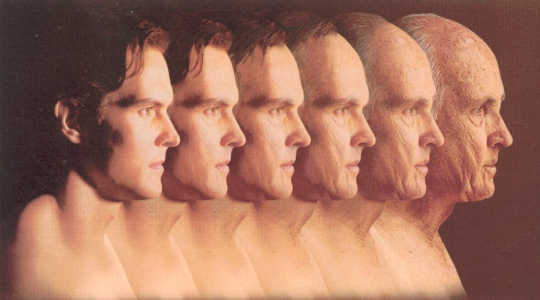
In 2100, I will be 117 years old, and my younger sisters will be 112 and 107. According to the Cambridge academic, Peter Laslett, we can now live to such ages, but those of us who do will be experiencing the fourth age, “an era of final dependence, decrepitude and death”. Not quite the dream of “active ageing” and a positive old age.
It used to be the case that most of us would die at the end of the third age, about ten years after retiring, when we had plentifully enjoyed the company of our family, were still in fairly good health, and we successfully had completed the life projects we’d planned. Then, the process of dying and death, as well as the care associated with it, would happen in the space of a matter of months.
Now, increasing life expectancy means that we are living longer than ever before. But we don’t ask enough whether this is actually good news.
Living into the fourth age means that, little by little, our senses will leave us. We may well be doubly incontinent, and our sight, like our senses of hearing and taste, will be profoundly impaired. Physical abilities will be severally compromised and we will probably find ourselves bed bound in a care institution for several years. Our social universe will shrink significantly and few friends and family members, if any, will be left to visit, leading to feelings of social isolation and loneliness. I also imagine young carers playing us ABBA on the stereo because they assume that’s what we listened to in our youth.
According to the Alzheimer’s Society, one in six of us will suffer dementia. Consequently, many of us will experience dying with reduced mental capacity along with all its challenges.

And what if we fall into a coma and our next of kin are forced to ask: “Why are patients in permanent comas routinely kept alive?” This will then inevitably raise ethical questions regarding what treatment to give – or not give – to a patient who is nearing the end of a very long life.
Perhaps we will be “lucky” and free of degenerative diseases of the brain. We will then have much more time to think clearly, dwelling on the many emotional hurts that we have done to others or which have been done to us during the course of our lives and which can no longer be put right – something that gerontologist Malcolm Johnson has called “biographical pain”.
Johnson suggests that a third of all deaths are people aged over 85. Two thirds of those over 75 are women – more in the higher age groups – and two thirds of this group of women live alone, are widowed or never married, which makes the female population more vulnerable.
This is also perhaps why many have argued that we must be responsible citizens and take charge of our death and dying, as campaign organisation Dying Matters advocates. And in general we are also being encouraged to make legally-binding advanced decisions in case we become minimally conscious.
It is also advisable, if not necessary, to plan for our funerals. This is due to the profound financial strain it puts on our next of kin and the difficulties associated with sometimes unwieldy systems of financial support for funerals.
In the light of the above I suggest that we go beyond talking about “active ageing” and confront the physical as well as spiritual reality of dying in the fourth age. We need critically to examine what it really means to live so long and whether we really wish to prolong an era of dependence, decrepitude and death.
This article originally appeared on The Conversation
{amazonWS:searchindex=Books;keywords=how not to die;maxresults=2}

Thanks for visiting InnerSelf.com, where there are 20,000+ life-altering articles promoting "New Attitudes and New Possibilities." All articles are translated into 30+ languages. Subscribe to InnerSelf Magazine, published weekly, and Marie T Russell's Daily Inspiration. InnerSelf Magazine has been published since 1985.












Cultures on every continent around the world have a collective memory of a time when their ancestors were hunter-gatherers and lived in the forest as a part of nature itself. The Aborigines of...
What if the so-called “inevitable” decline of aging isn’t inevitable at all? A new study in Nature Aging just threw a wrench into one of modern medicine’s favorite theories: that inflammation...

“A red sky at night is a shepherd’s delight! A red sky in the morning is a shepherd’s warning.” The “red sky” proverb has endured across cultures for centuries, and modern science can explain why...

Americans love their pets, spending more than US$70 billion last year on their beloved companions. This far exceeds the $7 billion spent on legal marijuana, and $32 billion on pizza, just for two...

This article is written with the purpose of asking your employer for feedback, however some of its tenets can also be applied to asking friends, loved ones, where you volunteer, committees you are...

AI will soon become impossible for humans to comprehend – the story of neural networks tells us why.