

Can You Really Change the World Starting With One Choice?
The world feels broken, but what if the solution isn’t out there—it’s within you? Every thought, every reaction, every choice shapes…


Hannah Arendt went to Jerusalem in 1961 expecting to see a monster. What she found was a bureaucrat who was very good at his job. That gap between what she expected and what she saw produced one of the most important — and most uncomfortable — ideas of the 20th century. And we have spent sixty years doing our level best to ignore it.

American warplanes have destroyed more than five thousand targets inside Iran. The Strait of Hormuz remains effectively closed. Oil is trading near two hundred dollars a barrel. And the administration in Washington is searching for a way to call this a victory. The Hormuz Vise is not a war the United States is losing in the traditional sense. It is a war that cannot be won the way Washington imagined it would be won, and the bill is arriving at every gas pump in America.
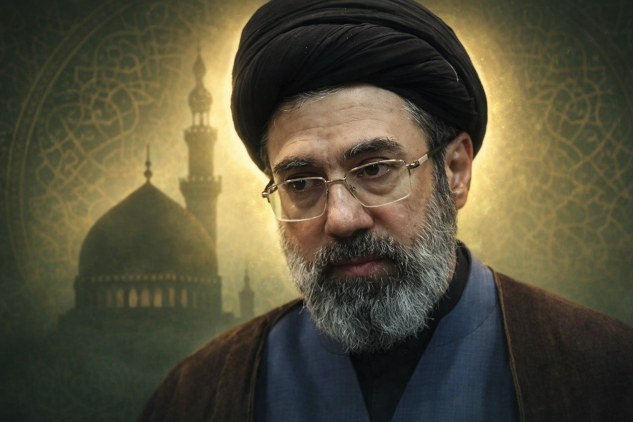
On June 28, 1914, a nineteen-year-old with a pistol shot Archduke Franz Ferdinand in Sarajevo. Six weeks later, the world was at war. The assassination did not cause the war by itself. The global system was already under stress , militarized alliances, imperial rivalries, wounded nationalisms all coiled together like a spring. The bullet was just the release mechanism. When the United States and Israel killed Iran's Supreme Leader, they may have pulled a trigger in a world that is, once again, already coiled.
At 81, I have watched the country I put on a uniform for at 17 drift toward the very thing I was trained to fight. I have sounded this alarm for 26 years. I have felt dismissed, abandoned, and exhausted. And still my soul will not let me quit. This is not nostalgia. This is reconnaissance. And what I am seeing on the ground right now is the most serious threat to American democracy in my lifetime.

Sun Tzu understood that strategic power operates best when it's invisible—winning without fighting, controlling without coercion, defeating opponents who never realize they're in a battle. His work wasn't about military conquest but about perception, positioning, and psychological advantage.

George Orwell documented how political control works through language manipulation, surveillance normalization, and the corruption of truth. His analysis was dismissed as dystopian fiction, yet modern institutions operate exactly as he described. Orwell understood that power doesn't need to convince people—it just needs to confuse them long enough that clarity becomes dangerous. We've crossed from reading Orwell as warning to experiencing him as instruction manual. The question is whether we notice before noticing becomes impossible.

A cowboy philosopher who died in 1935 understood American politics better than most living analysts. Will Rogers wielded humor as surgery, not entertainment—cutting through corruption without killing hope. His political wisdom survived the Great Depression, multiple wars, and technological revolutions because he spoke to something deeper than ideology. In an age of manufactured outrage and tribal warfare, Will Rogers offers what we've lost: clarity without cruelty, skepticism without despair, and patriotism that tells the truth.
Presidential failure isn't an abstraction anymore—it's reshaping global power in real time while most Americans sleep through the alarm. As erratic leadership threatens allies and violates basic norms, countries worldwide are activating backup plans they built specifically for this moment. The siege America faces doesn't come from foreign armies. It comes from within: adolescent impulse meeting superpower capability while adversaries exploit the chaos with surgical precision.

What if the fuel behind widening inequality isn’t just policy or markets, but a psychological gap—an inner disconnection that drives some people to grasp for money and status to soothe what they can’t name? This article examines how isolation begets power hunger, why that spills into social imbalance, and how empathy, kindness, and community can reverse the damage at scale and in our daily lives.
Every headline screams emergency, every scroll adds a fresh anxiety, and the word “crisis” feels like the background music of our lives. But is the world truly more unstable—or are attention economics, algorithmic amplifiers, and our wired nervous systems making normal turbulence feel like collapse? This essay separates signal from noise and offers a practical framework for staying informed without being consumed, pairing clear-eyed metrics with daily habits that restore perspective and agency.

In July 2025, the U.S. government quietly made a decision with enormous consequences: slashing over $1.1 billion in funding to public broadcasting. That money doesn’t just support “elite” institutions like PBS or NPR headquarters—it keeps local stations alive, especially in rural America. Ironically, the voters who will suffer most are the very ones who helped elect the lawmakers behind the cuts. Welcome to the latest chapter in the slow dismantling of the American commons—where public services are gutted in favor of tax breaks for billionaires, and voters are left in the dark. Literally.

Antarctic summer sea ice is vanishing fast—threatening wildlife, warming oceans, and pushing our climate system to the brink. Here’s what scientists just uncovered.

The Supreme Court ruling allowing Trump deportation to war-torn nations marks a dark chapter for human rights. This decision, devoid of legal reasoning, greenlights state-sponsored cruelty, sending vulnerable people into zones of chaos and violence. It’s not just a legal technicality—it’s complicity. We must face what this ruling says about our institutions and our moral compass before more lives are shattered.

Is the national debt really driven by Social Security and Medicare? No! Learn how tax cuts for the wealthy, wars, and political manipulation inflate deficits while benefiting the rich. This article reveals the truth behind the debt myth and explains how the Federal Reserve could wipe it out without harm. Don’t fall for scare tactics—understand how the system works and who it serves.

Silicon Valley venture capitalists are reshaping defense and democracy, driving military AI while risking election interference. The consequences? A fragile future.
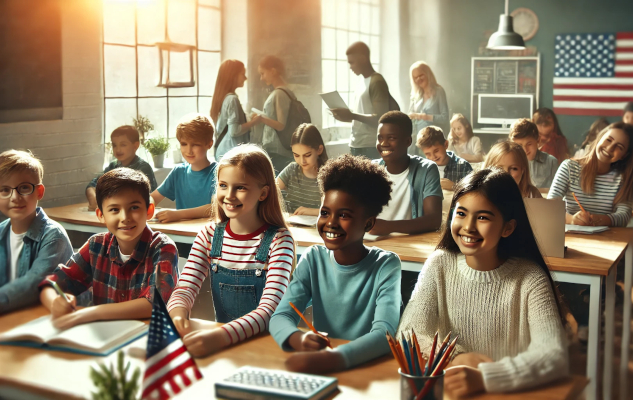
The American dream is within reach for all when we break the cycle of poverty, hopelessness, and inadequate education. This article outlines an innovative program designed to empower the next generation by providing essential tools and opportunities, from preschool to high school. By ensuring access to quality education and economic resources, we can foster a more united and hopeful nation where everyone has a chance to live out the American dream.

Trump and Project 2025, led by the Heritage Foundation and supported by over 100 conservative groups, outlines significant changes that could undermine voting rights and election integrity, continuing a long history of GOP voter suppression tactics.

Very few names carry as much infamy and intrigue as Joseph Goebbels. As the mastermind behind Nazi Germany's massive propaganda machine, Goebbels was a master at manipulating media and waging psychological warfare.

Reality has a funny way of clashing with the stories politicians and pundits love to spin, especially regarding hot-button issues like crime.
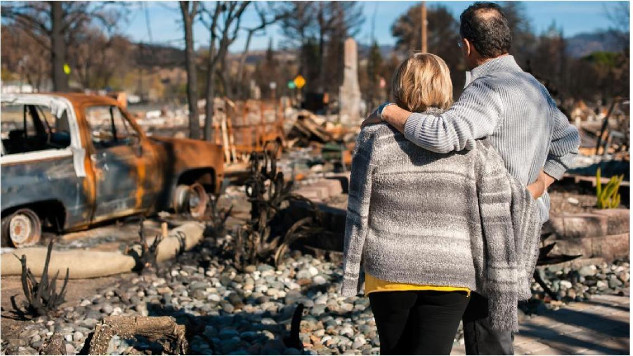
As the world grapples with climate change, a looming crisis is unfolding in the United States housing market.

The political boundary that separates unity from division today isn't sketched with the definitive lines of truth; rather, it is shaded with the elusive techniques of manipulation and misinformation. At the heart of authoritarian regimes lies a profound grasp of the human psyche.

As the 2024 presidential election approaches, there are troubling reports of a coordinated plan by far-right groups to deliberately undermine the integrity of the results in key swing states.
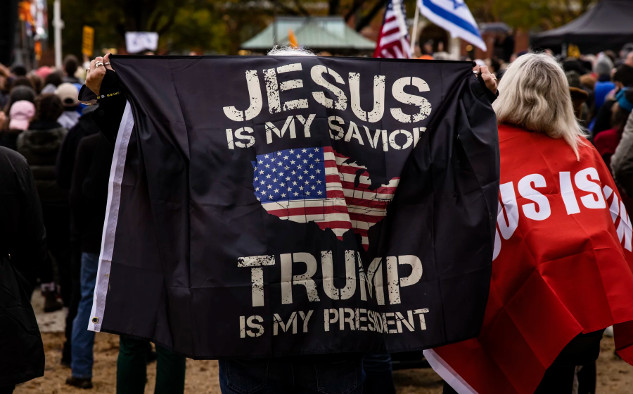
Tim Alberta has stared into the abyss of extreme partisan Christianity in America - and somehow still sees light at the end of the tunnel.