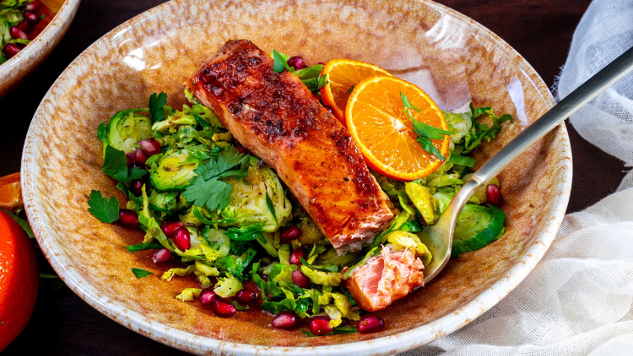
Wild salmon and farmed salmon may look alike in the grocery case, but beneath their pink flesh lies a story of health, flavor, sustainability, and choice. The question isn’t only about what tastes better on your plate, it’s about how your decisions ripple out into your well-being and the wider world. So, does it really matter which one you choose? The answer, like most meaningful things, touches both body and spirit.
In This Article
- What makes wild salmon and farmed salmon different?
- Which one is healthier: wild salmon or farmed salmon?
- Are there safety risks in eating farmed salmon?
- How does sustainability factor into the salmon debate?
- What’s the best way to cook each type of salmon?
Wild Salmon vs. Farmed Salmon: Taste, Health, and Planet Impact
by Beth McDaniel, InnerSelf.comIf you’ve ever sunk your fork into a piece of wild salmon, you may remember the firm texture, the almost briny whisper of the sea, and the way the flavor lingers on your tongue. Now compare that to farmed salmon: softer, fattier, and milder, like the difference between a bold mountain stream and a still, warm pond. Neither is wrong, it depends on what your palate craves.
But the distinction is real. Chefs often describe wild salmon as leaner and more intense, while farmed salmon offers consistency and forgiving qualities for the home cook. Which do you prefer? A taste that makes you sit up and take notice, or one that comforts you with its gentleness?
Nutrition: The Numbers Behind the Flavor
Beyond taste, the nutritional profiles differ. Wild salmon often carries fewer calories, less fat, and more minerals like potassium and iron. Farmed salmon, raised on controlled diets, tends to be higher in omega-3s simply because it is fattier overall.
At first glance, that sounds like a win for farmed salmon. But balance is key. Omega-3s soothe inflammation and nourish your brain, yet too much fat can also bring in higher levels of omega-6s, which can fuel inflammation. When you take that first bite, you’re not only savoring flavor, you’re engaging with an entire biochemical symphony playing inside your body.

Safety and Contaminants: What Lies Beneath
Here is where the story turns more complicated. Farmed salmon sometimes raises eyebrows due to antibiotics used in crowded pens or contaminants like PCBs that accumulate in fatty tissues. Regulations vary widely between countries, which means not all farmed salmon is created equal.
Some producers have improved their methods dramatically, shifting feeds and reducing drug use. Still, wild salmon generally carries fewer of these worries, though it is not immune, mercury and environmental pollutants touch even the wild oceans. Have you ever wondered what invisible legacies come along with the food you place on your plate?
Sustainability and Ethics: The Bigger Picture
When it comes to sustainability, the question deepens. Wild salmon runs are under pressure from overfishing, habitat loss, and climate change. Entire ecosystems depend on salmon returning to their rivers to spawn, carrying ocean nutrients back into forests and feeding bears, birds, and even trees.
Farmed salmon, meanwhile, has faced criticism for polluting coastal waters and spreading disease to wild populations. Yet here, too, innovation is stirring: some farms are shifting to closed systems, reducing their ecological footprint.
So when you buy salmon, you’re not just shopping for dinner, you’re casting a vote for the future of oceans and rivers. What world do you want your grandchildren to inherit?
Cooking with Heart: How to Bring Out the Best
Cooking salmon becomes an act of creativity once you understand its differences. Wild salmon, leaner and quicker to dry out, responds well to gentle methods, think poaching in lemon-scented water or baking with a drizzle of olive oil.
Farmed salmon, with its higher fat content, loves high heat, pan-searing until the skin crackles or grilling with smoky char marks. The kitchen becomes your canvas. Do you want a meal that speaks of refinement and care, or one that comforts with rich indulgence? Either way, you hold the brush.
Food is never just food. It’s memory, it’s culture, it’s the quiet ritual of feeding yourself and those you love. Perhaps you grew up with wild salmon as a special treat, caught on summer trips or served at holiday tables. Or maybe farmed salmon became your weeknight staple, affordable and easy to find.
Both carry meaning. In choosing, you may find yourself asking: What values do I want my meals to reflect? Am I choosing convenience, tradition, health, or the planet? There is no wrong answer, only the answer that feels most authentic to you.
A Story of Connection
Imagine the journey of a wild salmon: born in a mountain stream, carried to the ocean, then returning years later against the current to the place of its birth. Its life is a story of resilience, a reminder of cycles older than human memory.
Now picture a farmed salmon: raised in pens, fed and monitored, designed to meet our hunger with predictable abundance. One reflects freedom and risk, the other speaks of control and security. Both mirror aspects of our own lives, when do we crave adventure, and when do we long for stability? In this way, salmon becomes not just a meal but a metaphor.
So, does it matter? Yes, and no. Both wild and farmed salmon can nourish you, delight your palate, and provide essential nutrients. Both carry risks and benefits. What matters most is not only the salmon itself, but the consciousness you bring to your choice.
If you choose wild, savor its uniqueness and respect the fragile ecosystems that sustain it. If you choose farmed, seek producers who are pushing toward sustainability and transparency. Let your meals reflect your care for yourself and the world you inhabit. Isn’t that, after all, what conscious living is about?
At the end of the day, salmon is more than protein, it is story, spirit, and sustenance. Your fork is a compass pointing not only toward health, but toward the values you live by. Each choice at the fish counter is a small echo of the life you are building: mindful, empowered, and aligned with your heart.
So the next time you stand before those rows of fillets, pause. Feel the connection between yourself, the fish, the ocean, and the future. Then choose with grace. Your body, and the planet, will thank you.
About the Author
Beth McDaniel is a staff writer for InnerSelf.com
Recommended Books
The Omega Principle: Seafood and the Quest for a Long Life and a Healthier Planet
A thoughtful dive into the role of seafood in human health and the challenges of sustainability. It connects omega-3 fats to global food systems and our choices.
https://www.amazon.com/exec/obidos/ASIN/1594206341/?tag=innerselfcom
Salmon: A Fish, the Earth, and the History of Their Common Fate
A sweeping history that connects salmon’s life cycle to environmental challenges, showing how human destiny is intertwined with this extraordinary fish.
https://www.amazon.com/exec/obidos/ASIN/1938340868/?tag=innerselfcom
Article Recap
The debate between wild salmon and farmed salmon stretches far beyond the dinner plate. Wild salmon offers firmer texture, leaner nutrition, and a connection to ancient cycles, while farmed salmon provides affordability and omega-3 richness. Both carry risks and both have a role in sustainable futures. Choosing mindfully allows you to nourish both body and planet, making wild salmon vs. farmed salmon a question of values as much as taste.
#wildsalmon #farmedsalmon #healthyfood #sustainableeating #seafoodchoices #mindfulcooking #nutrition #fooddebate #innerselfcom