Can You Really Change the World Starting With One Choice?
The world feels broken, but what if the solution isn’t out there—it’s within you? Every thought, every reaction, every choice shapes…

 In an age where the weather app is a tap away, we don’t need to look far for a forecast. But what if you don’t have internet? Have you noticed how nature gives its own subtle forecast clues?
 A new device can produce enough food to make one salad per week for an entire year—and do it inside an apartment.
 As the weather heats up, Australian households won’t just be cranking up the air conditioning for themselves.
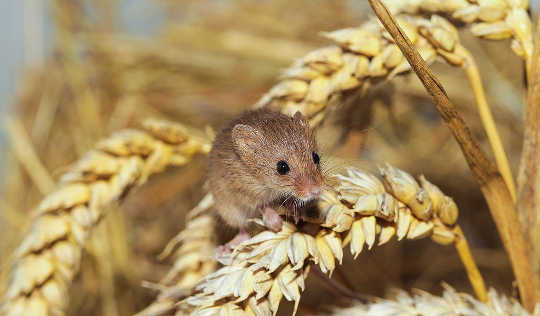 Hunter-gatherers began putting down roots in the Middle East long before the advent of agriculture.
 Tracking the movements of three species of migratory birds indicates that finding food may become a challenge for them by the end of the century.
 On a moonless night, light levels can be more than 100m times dimmer than in bright daylight.
 The discovery of a core set of genes involved in the responses of honey bees to multiple diseases caused by viruses may help scientists and beekeepers breed honey bees more resilient to stress.
 Over the past few years, cats have increasingly attracted media attention due to a number of scientific studies reporting that a Toxoplasma Gondii (T. Gondii) infection is linked with mental health issues, including schizophrenia, suicide and intermittent rage disorder.
 In the heat zone of Louisville, Kentucky, 170 residents have been trained as “citizen foresters.”
 Nearing the lake on that warm September morning, I heard a tiny mewing sound. My first inclination was to ignore the cries. I've been through enough lately, I thought; I can hardly take care of myself. Meow! Meow! The insistent pleas continued.
 I raised my hand in class at the University of Santa Monica and quietly shared that there was something I needed to own. I told the class that I’d had an extraordinary experience of personal healing in my life, and that I was a healer. That I had been working for a number of years on developing and refining my approach...
 It brings many people joy to provide food and water for birds, to encourage them to stay a while and be given the chance to observe them more closely. But some people are reluctant to interact with birds in this way because they’re worried it might damage the birds’ health.
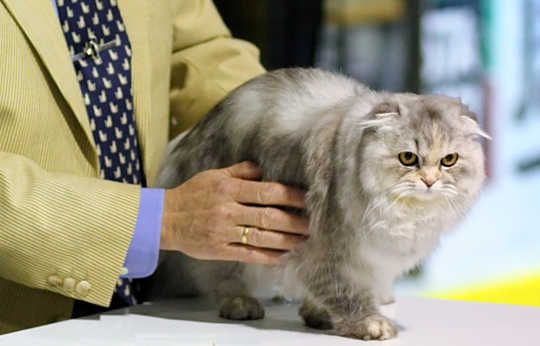 A new drug shows promise for treating heart disease in cats and humans, report researchers.
 Researchers saw a three-fold increase in BPA levels in dogs who ate canned dog food for two weeks. They also saw changes in the dogs’ gut microbes.
 Farmers looking to reduce reliance on pesticides, herbicides, and other pest management tools may want to heed the advice of agricultural scientists: Let nature be nature—to a degree.
 A new report has found that U.S. land for organic farming reached 4.1 million acres in 2016, a new record and an 11 percent increase compared to 2014.
 Far from the 9-to-5, the work of building community can be a challenge when the cash economy is less relevant and volunteers are just passing through.
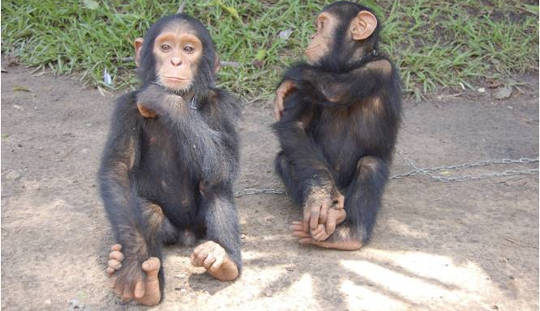 Anthropologists for the first time have captured on video wild chimpanzee mothers teaching their offspring to use tools to find food. The videos were made at termite mounds in the Nouabalé-Ndoki National Park in the Republic of Congo.
 Is the throwaway era about to end? The past half century has given us toasters that are irreparable after a minor fault, T-shirts that quickly shrink or fade, and vacuum cleaners that need replacing after a few years.
 The bird experts and authors of the book Cat Wars recently called for all free-roaming cats to be euthanised or kept on a lead. They argue that cats’ tendency to kill birds and small mammals has lead to a catastrophic decline in the numbers of these creatures.
 As the weather warms and days lengthen, your attention may be turning to that forgotten patch of your backyard. This week we’ve asked our experts to share the science behind gardening. So grab a trowel and your green thumbs, and dig in.
 Dog owners often notice their pets watching televisions, computer screens and tablets. But what is going on in their pooch’s head? Indeed, by tracking their vision using similar methods used on humans, research has found that domestic dogs do prefer certain images and videos.
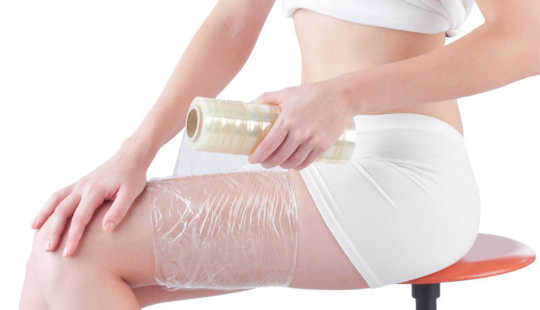 If woven into clothing, a new low-cost, plastic-based textile could cool your body far more efficiently than is possible with the natural or synthetic fabrics in clothes we wear today.