Can You Really Change the World Starting With One Choice?
The world feels broken, but what if the solution isn’t out there—it’s within you? Every thought, every reaction, every choice shapes…

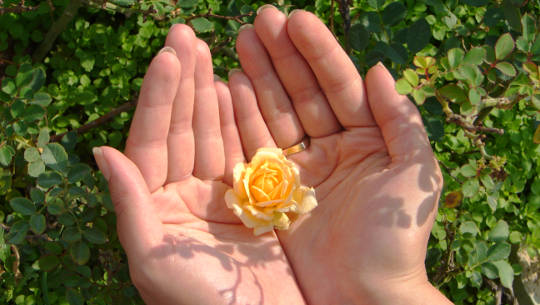 When circumstances in our lives are too overwhelming, chaotic, frightening, or out of our control, the best response, based on courageous wisdom, is to release the circumstances. This is not always easy, but it can be done. This exercise will help you give form to your feelings and provide you tools for surrender.
 No one does this conscious-living thing perfectly, so the idea isn’t to always be grounded in the present, but to be there as often as possible, certainly more often than not; know when you’re slipping out of it; and be able to bring yourself back as quickly as possible.
 “You owe me” is resentment. “I owe you” is guilt. And the longer our interactions go on like this, the more impoverished we become. We lose our balance, the heart is thrown askew. The gut tightens. The eyes cannot open fully. But forgiveness rebalances the mind and brings kindness to the senses.
 Holding the hummingbird was a gift. It was an awesome privilege to be given thirty unforgettable minutes when time stood still and I held the most exquisite creature in my hands, felt its warmth, and marveled at its magnificence.
 Could it finally be time in the evolution of humanity to revisit our belief in the value of suffering? Many religions and belief systems accept suffering as an inescapable reality, and even glorify it. Christians stoically sing of bearing the old rugged cross. Hindus justify poverty and disease as the paying off of karma...
 When children expect aggression from others, it may cause them to be overly aggressive themselves, a new study finds. While the pattern is more common in some cultures than others, a four-year longitudinal study involving 1,299 children and their parents finds it is true in 12 different cultural groups from nine countries around the globe.
 Think of the last time you ate some chocolate. Did you feel you had to sneak it? Did you eat too much and regret it afterward? Did you hog down the lot of the precious morsels? And how did you feel after your escapade? Were you able to enjoy the chocolate fully? I certainly hope so!
 One morning Rose began our session by saying it was time for me to take a very important journey. “It’s a journey we all must take within this lifetime. It’s the journey that takes us from being a child to becoming an adult. And what you need to make this journey are the powers of love and forgiveness.”
 A fellow set out to find a particular saint who lived in a remote village. The shopkeeper told him he would find the saint under a certain tree, teaching disciples. Excited, the seeker made his way to tree, but instead of finding the saint he saw a drunkard blabbing with a couple of guys.
 “What was going on? What do you want?” She looked up at me and wailed, “I just want to be happy.” Don’t we all? No matter who we are or what our circumstances, isn’t that what we each long for? Happiness, the experience of the sheer joy of being alive.
 When we cut through the smoke and mirrors of guilt, we can see that the thoughts and emotions that ignite guilt are all made up. When our self-awareness “muscles” strengthen, we find that we’re less apt to fall into the default pattern of simply reacting to the unconscious flow of our thoughts and emotions.
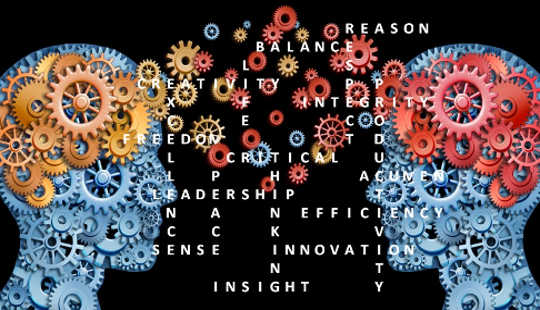 It has been well established that people have a “bias blind spot,” meaning that they are less likely to detect bias in themselves than others. However, it hasn’t been clear how blind we are to our own actual degree of bias, and how many of us think we are less biased than others.
 Someone with panic disorder does not know how to turn off the false alarm process once it gets going and must endure a terrifying experience of unknown duration, even if there is nothing apparent to fear. We all take in squintillions of units of information daily. Our brains have to filter data so that we can conduct some what rational lives without being overwhelmed.
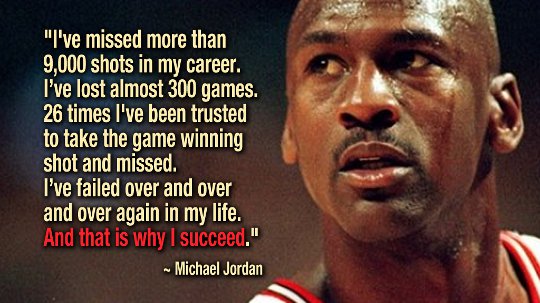 We do not teach people how to fail in our education system. The purpose of exams is to get questions correct. The people who are rewarded in school are the ones who get the best grades, not the ones who take the biggest risks or the ones who learn from their mistakes.

Research reveals that self-promotion can backfire, leading to negative perceptions among peers. Individuals often overestimate the joy others feel in response to their achievements while underestimating annoyance. Strategies like empathy and perspective-taking can mitigate these effects, fostering healthier social interactions both online and offline.

Living an aware life involves recognizing and avoiding the black holes of negativity that can disrupt well-being. From managing stress addiction to employing techniques like laughter and naps, individuals can learn to foster a positive mindset. Practical strategies for stress relief and awareness can significantly improve mental and physical health.
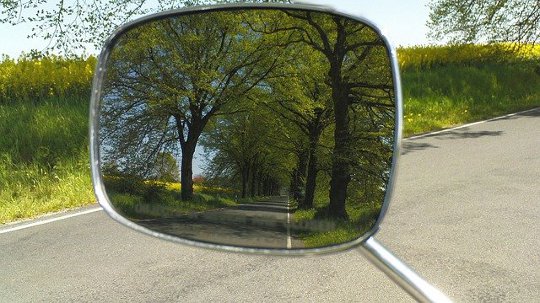 Only in my life’s rear-view mirror do I see that I began to write “The Un-Game” long ago. As a cross-culturally naïve eleven-year-old, my world was rocked upon my arrival in New York City with my immigrant family. The assault on my German mind-set felt like an earthquake snatching away all my precious, unquestioned certainty.
 The more committed we are to achieving a goal—catching a train, buying a movie ticket, getting groceries—the more likely we are to assume others have exactly the same objective. The new study by New York University psychology researcher Janet Ahn points to the types of assumptions we make about others’ behavior, which may have an impact on social interaction.
 A simple experiment with a small group of college students suggests that punishments influence behavior more than rewards. In fact, punishments—in this case, losing money tokens—had a measured impact two to three times great than winning money. The results appear in the journal Cognition.
 There are two different types of acknowledgment. There are compliments which are more superficial and then there are deeper appreciations that involve your character and inner qualities. How do you handle acknowledgment from others?
 Life teaches us that we cannot be released from powerful, stressful emotions by resisting, ignoring, or repressing them – no matter how hard we try. In fact, life teaches us just the opposite. We learn from experience that resisting, repressing and ignoring unpleasant emotions just tend to make things worse.
 Mahatma Mohandas Gandhi once advised, “We must become the change we want to see in the world.” Perhaps if we were each to expand forgiveness, gratitude, and love in our own lives, the collective influence of our healthy, loving relationships would reverberate across our generations and into the future.
 Most of us walk around with heads busy as beehives, aware of some thoughts as they come and go but not fully aware of the buzz of mental activity just beneath the surface. Every once in a while, it’s a good idea to stop and ask yourself, What was I thinking?