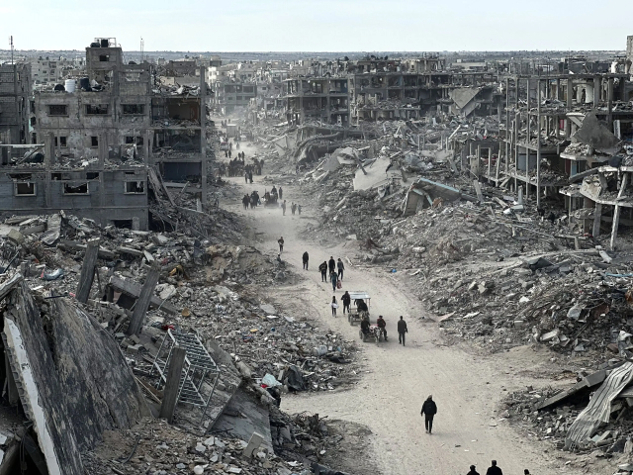
The destruction of Gaza.
Empathy is a word we all know, but lately it feels like we are forgetting what it means in practice. When compassion starts to fade, society begins to shift in ways that touch every part of our lives, our families, our communities, even our politics. If you’ve been feeling that people seem colder, harsher, or more disconnected than before, you’re not imagining it. Empathy decline is real, and it has consequences we can’t afford to ignore.
In This Article
- What does empathy mean for society as a whole?
- Why are we experiencing empathy decline today?
- What is “compassion fade,” and how does it shape behavior?
- How does the loss of empathy threaten democracy and trust?
- What steps can we take to restore compassion and connection?
Why Empathy Decline Is Fracturing Us
by Beth McDaniel, InnerSelf.comThe Vanishing of Empathy
When was the last time you truly felt another person’s joy or pain? Maybe it was when your friend shared heartbreaking news, or when a stranger’s kindness caught you off guard and left you smiling for hours. These moments are powerful because they remind us of our shared humanity. But something troubling is happening today, those moments are becoming rarer. The world is noisier, harsher, more distracted, and in the process empathy seems to be slipping through our fingers.
Empathy isn’t just a nice personal trait. It’s the invisible web that connects us. Without it, compassion shrivels, community fractures, and fear rushes in to fill the void. And here’s the truth: empathy is not only vanishing in individuals, it’s waning on a societal scale. This is what psychologists call “compassion fade.” The more people suffer, the less we seem able to care. Strange, isn’t it? Yet the evidence is all around us.
What Empathy Means for Society
Empathy is often described as walking in someone else’s shoes. But it’s more than that. In a society, empathy is the heartbeat that keeps compassion alive across differences, differences of class, race, religion, or nationality. It’s what makes us invest in schools even if we don’t have children, or pay taxes for public health systems even if we are healthy. It is the force that turns strangers into neighbors and neighbors into a community.
Without empathy, life becomes a competition of “me versus you.” And when “me” always wins, the “we” disappears. Think about it: what happens to a democracy when no one feels responsibility for anyone else? What happens to communities when people stop showing up for one another? The answer is chilling. History shows us that when empathy breaks down, societies drift toward cruelty, division, and authoritarian control.

Why We Care Less When Numbers Rise
Here’s where it gets fascinating and a bit unsettling. Research shows that we are wired to respond emotionally to the suffering of one identifiable person but become numb when the suffering is widespread. One child in distress can move the world to act. A million children, and suddenly the tragedy feels abstract, distant, almost too big to grasp. This is the essence of compassion fade.
It’s not that we don’t care. It’s that our brains retreat when overwhelmed by scale. The suffering becomes statistics, and statistics rarely stir the heart. That’s why headlines about war casualties or climate disasters often fail to spark real empathy. We shake our heads, maybe say “how awful,” and move on. Meanwhile, the people inside those numbers continue to bleed, grieve, and hope someone will notice.
When Societies Lost Empathy
History is full of cautionary tales. In ancient Rome, as inequality grew, the wealthy elite built lavish villas while the poor crowded into tenements. Bread and circuses distracted the masses, but beneath the spectacle was a society that had lost its sense of common humanity. Rome fell not only because of military defeats but because its social fabric was already frayed by indifference.
Closer to our own time, think of the Jim Crow era in the United States. Entire systems were built on denying empathy to Black Americans, treating them as less than human, ignoring their pain, their rights, their voices. Only when movements forced empathy back into the public consciousness did progress begin. Every leap forward in human rights has come from an expansion of empathy, from abolition to women’s suffrage to marriage equality.
So the lesson is clear: empathy isn’t just a private virtue. It’s the oxygen of justice, and without it, society suffocates.
Today’s Warning Signs
Look around, and the warning signs are hard to miss. Social media has become a megaphone for outrage but not for listening. Political debates sound more like cage matches than conversations. Studies show that narcissism is on the rise while empathy scores among young people have dropped significantly over the past few decades. We see more finger-pointing, more blame, and less willingness to pause and imagine the life of another.
Technology, too, plays a part. We scroll past suffering with the flick of a finger, moving from tragedy to comedy in seconds. Our attention spans shrink, and so does our capacity to linger in someone else’s reality. Add to this economic stress, growing inequality, and cultural divides, and empathy can feel like a luxury in a world that demands constant self-protection.
Why Empathy Matters for Democracy and Community
Democracy is not just about laws or elections. At its heart, democracy is about trust, the trust that others will also respect the rules, that communities will care for their vulnerable, that the common good matters as much as private gain. But trust cannot survive without empathy. If you don’t believe my suffering is real, why would you support policies to ease it? If I don’t see your humanity, why would I defend your rights?
This is why empathy decline is more than a cultural concern, it’s a political crisis. When empathy collapses, polarization hardens. Leaders who exploit fear and division thrive, because they no longer have to appeal to shared humanity. Instead, they can win by pitting groups against each other. The result? A society that looks less like a community and more like a battlefield.
Rebuilding Empathy: Pathways to Renewal
Here’s the hopeful part. Empathy is not gone forever. It can be rebuilt, person by person, community by community. The first step is awareness. Once you know about compassion fade, you can resist it. When you see a story about “millions affected,” don’t let your mind slip into numbness. Pause. Picture just one person within that number. Imagine their day, their fear, their small hopes. Suddenly, the number has a face again.
We can also train empathy in daily life. Slow down. Listen without interrupting. Ask yourself, “What might this person need right now?” Practice kindness not just when it is convenient but when it stretches you. Empathy grows through intentional practice, like a muscle. The more you use it, the stronger it becomes.
Communities can nurture empathy through education, art, and dialogue. Schools that teach emotional literacy raise not just smarter children but more compassionate ones. Art, music, and storytelling crack open our hearts to experiences beyond our own. And open conversations across divides remind us that behind every label, Republican, Democrat, immigrant, refugee, there is a beating human heart.
Choosing Connection Over Collapse
We stand at a crossroads. One path leads to indifference, where empathy decline continues until society feels hollow and brittle. The other path leads to renewal, where we resist compassion fade and choose to lean into each other’s humanity. The choice is ours, and it begins in small ways, how we listen, how we respond, how we care for those who cross our path.
If you’ve ever wondered whether your small act of kindness matters, remember this: empathy spreads. A gentle word, a hand extended, a heart that listens, these ripple outward. In a world that feels increasingly disconnected, your empathy may be the thread that helps weave us back together. And maybe that’s how societies heal, not all at once, but through millions of moments where someone chooses compassion over collapse.
Empathy is not dead. It is waiting for us to remember it, to practice it, and to pass it on. And in doing so, we might just rediscover what it truly means to be human.
About the Author
Beth McDaniel is a staff writer for InnerSelf.com
The Empath’s Survival Guide
A practical guide to help empaths and highly sensitive people navigate the challenges of modern life with resilience and compassion.
Against Empathy: The Case for Rational Compassion
An exploration of empathy’s limits and a call for a broader, rational form of compassion to guide personal and social decisions.
The War for Kindness: Building Empathy in a Fractured World
A hopeful look at how empathy can be taught and strengthened, offering tools to reconnect in an age of division.
Article Recap
Empathy decline and compassion fade are eroding society’s foundation of trust and cooperation. By naming these forces, we can resist indifference and reawaken our shared humanity. Restoring empathy isn’t optional, it’s the key to healing divisions and creating a more compassionate world.
#EmpathyDecline #CompassionFade #SocialConsciousness #HumanConnection #CollectiveHealing #SocietalChange #EmotionalIntelligence #CommunityCare #LivingInHarmony