Can You Really Change the World Starting With One Choice?
The world feels broken, but what if the solution isn’t out there—it’s within you? Every thought, every reaction, every choice shapes…

 Fox squirrels are a lot more organized than we thought—storing their stashes of nuts by variety, quality, and possibly even by preference. A new study is the first to show evidence that squirrels arrange their bounty—at least 3,000 to 10,000 nuts a year—using “chunking”...
 We have little control over the future. And the future is where we tend to look for our security, seeking the assurance that everything will be all right. The illusion is that we have control over many variables in our daily life and that...
 Being too self-critical is rampant in our society. We beat ourselves up over real and imagined imperfections. Whenever we criticize ourselves, we compound the issue. We turn one problem into two -- there's the social blunder, a poor financial decision or disapproving glance in the mirror -- and the demeaning self-loathing that follows.
 Acceptance of your fellow travelers has the power to change the journey for everyone you meet today. Its power isn’t restricted to just the interchange between two individuals. It permeates the encounters both of these individuals have with...

In my younger years, I focused on unimportant issues, punctuated by worry and anxiety. My perfectionist attitude and fear of making mistakes forced me to assure everything was in order, often making unimportant events a priority, for I was concerned about how my life looked to others. I am not proud of my focus, but it is the truth.
 In order to stop pointing out others' faults, we have to work on our underlying mental habit of judging others. Even if we don't say anything to or about them, as long as we are mentally tearing someone down, it's likely we'll communicate that through...
 Comparison is one of the ways the ego solidifies itself — either by making us feel special or small, which are two sides of the same coin. Thomas Jefferson captured this in one succinct sentence: Remember that no one is better than you, but that you are better than no one.
 Contrary to popular belief, you are more than your accomplishments. And conversely, you are more than your failures. Attaching your self-confidence to the outcome of your actions is like attaching it to the weather...
 Man, am I good at putting on a front. I’m guessing most of you, if you were really to take an honest look at yourselves, could probably relate. Now, when I say “putting on a front,” I’m talking about the me I let others see versus the me that’s underneath that exterior, the guy pretty much no one knows...
 Do you ever feel unworthy to receive good things in your life? It’s not an easy question to answer. Some of you are in touch with your feelings of not deserving. Some of you are not. I dare say that feelings of unworthiness are present in most of us...

No mother, no parent, can prepare for the tormented experience of the death of a child let alone begin to heal, even slightly, without help. Like many children born to fill a void in a family, I grew into a chubby, anxious little girl, with my desire to please not only my mother but also everyone.
 Often, we just can’t forgive. Although we may want to completely let it go, the debate in our minds and the emotion tied to the event are too strong, especially when the offense has occurred repeatedly over a long period of time.
 How many times have you had a good idea only to keep it to yourself for fear of looking like a crackpot? Well, this fear of appealing foolish is crippling. Worrying what other people think squelches our joy, our fun, and all those good ideas our planet needs.
 A very common example of the ubiquitous nature of the critic is the phenomenon of “imposter syndrome” — the feeling that you don’t deserve to be where you are in life. It’s estimated that 70 percent of people have imposter syndrome.
 Human memory does not operate like a video tape that can be rewound and rewatched, with every viewing revealing the same events in the same order. In fact, memories are reconstructed every time we recall them.
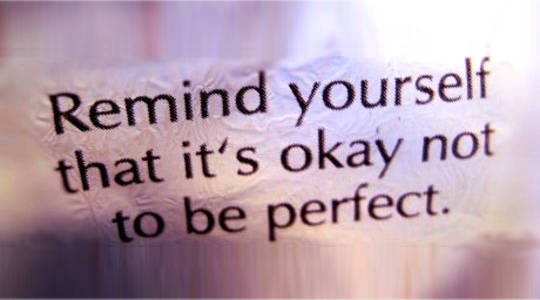 Feeling accepted seems to feature so highly in our lives. We set such great store by how others perceive us. Even amongst people you would count as close acquaintances, do you let them see the real you?
 Perfectionism can prevent us from acknowledging the best in ourselves because our attention becomes focused on overly obsessing with the worst in ourselves. As a result perfectionists often beat themselves up with negative self-talk and self-defeating behaviour.
 We are currently living in what I call the Never Enough Story, a cultural myth characterized by ideas of separation, unworthiness, and scarcity. It is a culture that indoctrinates each and every one of us to the idea that we are separate, on our own, and there is never enough to go around.
 This week the world saw – via that new, visual means of wildfire gossip-mongering known as “trending on social media” – Lil’ Kim’s new face and hair. For anyone who doesn’t know Lil Kim, she isn’t a teenage Instagram model – born Kimberley Jones in 1974, she’s one of the most successful female rappers the world has ever seen.
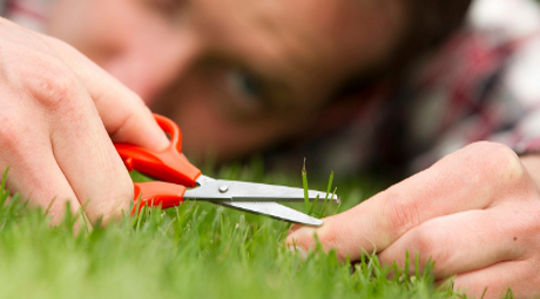 Many people still operate with an inner belief that if they try harder to be better — the best, perfect — then everything will be so much better in all areas of their lives. So they take a vow: “I have to be perfect and will be critical of myself until I am.”
 For the majority of people if they turned on a radio and the station was negative and critical, fearful, whining, or complaining they would turn it off. Most people would take control of the situation and choose something that would be more enjoyable and more productive. You may wish to take some time to tune in and really become aware of the background station that you are tuned into...
 In my daily work as a therapist/coach I've discovered there is one thing that we all have in common. We are all, everyone including me, so amazingly unkind and hard on ourselves. The truth is, I have never met anyone who is not super critical of themselves and who doesn't have unrealistic expectations when it comes to being a so-called "perfect" human being.
 Purplewashing is a term I have coined to describe the tendency people have to gloss over, repress, or deny uncomfortable emotions, usually by “spiritualizing” the situation or by “being nice” about it. I call it purplewashing because it is similar to...