

Ignore all the good and decent things that surround you in the course of an ordinary day.
Discover how to cultivate joy in daily life through simple practices that promote gratitude and appreciation. By shifting focus from negativity to the positive aspects around us, individuals can experience a profound transformation in their emotional well-being and overall outlook on life.
In This Article
- What leads to feelings of misery in daily life?
- How can joy be understood and integrated into life?
- What methods can be used to cultivate joy effectively?
- How can joy practices be applied in everyday situations?
- What are the potential risks or limits of focusing on joy?
Finding Joy in Everyday Life: Practical Strategies
by Donald Altman
One useful way to find joy is through noticing gratitude or appreciating the things in your life. This is surprisingly easy to do. Gratitude very much depends on where you place your attention. You have a choice: you can either focus on what is missing in your life, or you can focus on what is present. Here are three types of gratitude to reflect on:
Daily Basic and Personal Gifts
Roof over your head
Transportation
Sleep
Sunlight
Health
Smiling
Running water
Furniture
Chairs
Food
Coffee/tea
Trees
Walking
Your five senses
Electricity
A job
Clothing
Silence

Daily Relationship Gifts
Friends
Family
Caregivers
Conversation
Kindness
Giving
Receiving
Closeness
Laughter
Colleagues
Supporters
Sharing
Spiritual friends
Pets
Compassion
Celebrations
Shared meals
Cooperation
Daily Paradoxical Gifts
Appreciating a “paradoxical gift” means feeling joy or gratitude for something you wish wasn’t in your life. For example, if you came down with a cold or flu that kept you from going into the office, you could feel gratitude for how it forced you to slow down, think about taking better care of yourself, and get some much-needed sleep. Someone in a workshop said she was paradoxically grateful for losing her wallet because so many people were kind and helpful to her as a result of the incident.
One client I worked with was paradoxically grateful for the relationship loss of her best friend because it forced her to go out and meet new people — and she met a new best friend with whom she had more in common. Paradoxical gratitude illustrates that life is not an either-or proposition. As a wise sage once said, “Pray for what you already have in your life, and you’ll never be disappointed.”
To practice this, think about situations in your life right now that are difficult, and see if you can find the bright, silver lining. What paradoxical gratitude or joy is waiting for you?
2. Find a Joy Quote That Speaks to You
For some, being inspired by words and those we admire can help us find snapshots of joy. Use one of the quotes below — or find one of your own — that inspires you to take snapshots of joy.
Carry your joy quote with you — in your purse, wallet, or smart-phone — so you can look at it throughout the day and get centered on joy.
3. The GLAD Snapshot Practice
GLAD is an acronym I developed for finding joy and balance. It works by paying attention to certain positive aspects of life that are around us all the time, but which frequently go unnoticed. Sound easy? It is. The acronym stands for gratitude, learning, accomplishment, and delight. Each represents a joy snapshot that you can take.
To practice this daily, use your phone or an index card at the end of the day to write down and save your GLAD experiences. Share these with others, and at the end of the week, reflect on how many joy snapshots you found.
- Gratitude: Take a snapshot of something you’re thankful for today.
- Learning: Take a snapshot of something you learned about yourself today, such as noticing an insight or wisdom that you possess.
- Accomplishment: Take a snapshot of something you accomplished today, even if it was only a tiny step forward on a long-term goal. We mistakenly believe that accomplishments have to be supersized, but some of the best accomplishments are ordinary acts of self-care or giving to another.
- Delight: Take a snapshot of anything that made you laugh, smile, or feel joy today. This can be a thing of beauty, a chirping bird, a flower, a funny joke, a smile, your favorite color, and so on.
Which of these joy practices resonates with you the most?
Anytime you can share your joy practice with another, or ask someone what brings them joy or gratitude, you are creating a circle of joy in your life. What are some ways that you might use these practices with your family or friends?
©2016 by Donald Altman. Used with permission of
New World Library, Novato, CA. www.newworldlibrary.com
Article Source
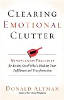 Clearing Emotional Clutter: Mindfulness Practices for Letting Go of What's Blocking Your Fulfillment and Transformation
by Donald Altman.
Click here for more info and/or to order this book.
About the Author
 Donald Altman, MA, LPC, is a psychotherapist, a former Buddhist monk, and the award-winning author of several books, including One-Minute Mindfulness, The Mindfulness Toolbox, and The Mindfulness Code. He conducts mindful living and mindful eating workshops and retreats and trains mental health therapists and business people to use mindfulness as a tool for optimizing health and fulfillment. Visit his website http://www.mindfulpractices.com.
Article Recap
Embracing joy through gratitude and playful practices can significantly enhance emotional well-being. Consider implementing joy snapshots in daily life to foster a more positive perspective.
#InnerSelfcom #JoyfulLiving #GratitudePractice #JoyfulMindset #EmotionalWellness #PositivePsychology