The right to believe what one wants is often misused to defend ignorance and misinformation. This article explores the ethical implications of belief, emphasizing the distinction between belief and knowledge, and the responsibilities that accompany the right to hold beliefs. It argues that while beliefs can be personal, they also shape societal attitudes and actions.
In This Article
- Is there a right to believe whatever one wants?
- What distinguishes belief from knowledge?
- How do beliefs influence ethical considerations?
- In what ways do beliefs apply in real-world contexts?
- What are the risks associated with unexamined beliefs?
Do we have the right to believe whatever we want to believe? This supposed right is often claimed as the last resort of the wilfully ignorant, the person who is cornered by evidence and mounting opinion: ‘I believe climate change is a hoax whatever anyone else says, and I have a right to believe it!’ But is there such a right?
We do recognise the right to know certain things. I have a right to know the conditions of my employment, the physician’s diagnosis of my ailments, the grades I achieved at school, the name of my accuser and the nature of the charges, and so on. But belief is not knowledge.
Beliefs are factive: to believe is to take to be true. It would be absurd, as the analytic philosopher G E Moore observed in the 1940s, to say: ‘It is raining, but I don’t believe that it is raining.’ Beliefs aspire to truth – but they do not entail it. Beliefs can be false, unwarranted by evidence or reasoned consideration. They can also be morally repugnant. Among likely candidates: beliefs that are sexist, racist or homophobic; the belief that proper upbringing of a child requires ‘breaking the will’ and severe corporal punishment; the belief that the elderly should routinely be euthanised; the belief that ‘ethnic cleansing’ is a political solution, and so on. If we find these morally wrong, we condemn not only the potential acts that spring from such beliefs, but the content of the belief itself, the act of believing it, and thus the believer.
Such judgments can imply that believing is a voluntary act. But beliefs are often more like states of mind or attitudes than decisive actions. Some beliefs, such as personal values, are not deliberately chosen; they are ‘inherited’ from parents and ‘acquired’ from peers, acquired inadvertently, inculcated by institutions and authorities, or assumed from hearsay. For this reason, I think, it is not always the coming-to-hold-this-belief that is problematic; it is rather the sustaining of such beliefs, the refusal to disbelieve or discard them that can be voluntary and ethically wrong.

If the content of a belief is judged morally wrong, it is also thought to be false. The belief that one race is less than fully human is not only a morally repugnant, racist tenet; it is also thought to be a false claim – though not by the believer. The falsity of a belief is a necessary but not sufficient condition for a belief to be morally wrong; neither is the ugliness of the content sufficient for a belief to be morally wrong. Alas, there are indeed morally repugnant truths, but it is not the believing that makes them so. Their moral ugliness is embedded in the world, not in one’s belief about the world.
‘Who are you to tell me what to believe?’ replies the zealot. It is a misguided challenge: it implies that certifying one’s beliefs is a matter of someone’s authority. It ignores the role of reality. Believing has what philosophers call a ‘mind-to-world direction of fit’. Our beliefs are intended to reflect the real world – and it is on this point that beliefs can go haywire. There are irresponsible beliefs; more precisely, there are beliefs that are acquired and retained in an irresponsible way. One might disregard evidence; accept gossip, rumour, or testimony from dubious sources; ignore incoherence with one’s other beliefs; embrace wishful thinking; or display a predilection for conspiracy theories.
I do not mean to revert to the stern evidentialism of the 19th-century mathematical philosopher William K Clifford, who claimed: ‘It is wrong, always, everywhere, and for anyone, to believe anything upon insufficient evidence.’ Clifford was trying to prevent irresponsible ‘overbelief’, in which wishful thinking, blind faith or sentiment (rather than evidence) stimulate or justify belief. This is too restrictive. In any complex society, one has to rely on the testimony of reliable sources, expert judgment and the best available evidence. Moreover, as the psychologist William James responded in 1896, some of our most important beliefs about the world and the human prospect must be formed without the possibility of sufficient evidence. In such circumstances (which are sometimes defined narrowly, sometimes more broadly in James’s writings), one’s ‘will to believe’ entitles us to choose to believe the alternative that projects a better life.
In exploring the varieties of religious experience, James would remind us that the ‘right to believe’ can establish a climate of religious tolerance. Those religions that define themselves by required beliefs (creeds) have engaged in repression, torture and countless wars against non-believers that can cease only with recognition of a mutual ‘right to believe’. Yet, even in this context, extremely intolerant beliefs cannot be tolerated. Rights have limits and carry responsibilities.
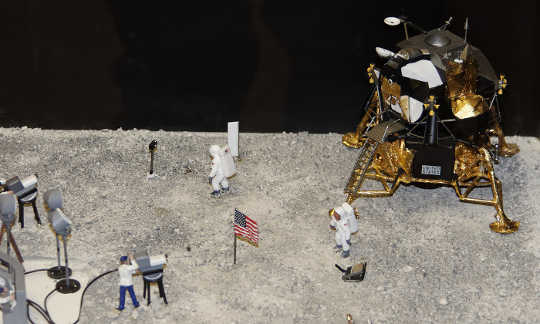
Unfortunately, many people today seem to take great licence with the right to believe, flouting their responsibility. The wilful ignorance and false knowledge that are commonly defended by the assertion ‘I have a right to my belief’ do not meet James’s requirements. Consider those who believe that the lunar landings or the Sandy Hook school shooting were unreal, government-created dramas; that Barack Obama is Muslim; that the Earth is flat; or that climate change is a hoax. In such cases, the right to believe is proclaimed as a negative right; that is, its intent is to foreclose dialogue, to deflect all challenges; to enjoin others from interfering with one’s belief-commitment. The mind is closed, not open for learning. They might be ‘true believers’, but they are not believers in the truth.
Believing, like willing, seems fundamental to autonomy, the ultimate ground of one’s freedom. But, as Clifford also remarked: ‘No one man’s belief is in any case a private matter which concerns himself alone.’ Beliefs shape attitudes and motives, guide choices and actions. Believing and knowing are formed within an epistemic community, which also bears their effects. There is an ethic of believing, of acquiring, sustaining, and relinquishing beliefs – and that ethic both generates and limits our right to believe. If some beliefs are false, or morally repugnant, or irresponsible, some beliefs are also dangerous. And to those, we have no right.
About The Author
Daniel DeNicola is professor and chair of philosophy at Gettysburg College in Pennsylvania and the author of Understanding Ignorance: The Surprising Impact of What We Don’t Know (2017), which received the 2018 PROSE Award in Philosophy from the Association of American Publishers.
This article was originally published at Aeon and has been republished under Creative Commons.
Further Reading
-
Ethics of Belief and Other Essays
This collection presents Clifford's foundational argument that it is morally wrong to believe anything without sufficient evidence. The article's central tension between Clifford's strict evidentialism and James's more permissive approach comes directly from this influential essay. Reading Clifford's own words reveals why he thought our beliefs carry ethical weight beyond mere truth or falsity—they shape our actions and affect the communities we live in.
Amazon: https://www.amazon.com/exec/obidos/ASIN/1573926914/innerselfcom
-
The Will to Believe and Other Essays in Popular Philosophy
James's response to Clifford defends our right to form beliefs in the absence of complete evidence when the stakes are high and the decision cannot wait. This work provides the counterbalance discussed in the article—the recognition that some of life's most important commitments must be made before all the evidence is in. James shows how rigid evidentialism can itself become a kind of dogma that prevents us from living fully human lives.
Amazon: https://www.amazon.com/exec/obidos/ASIN/1596058919/innerselfcom
-
Epistemic Injustice: Power and the Ethics of Knowing
Fricker extends the ethics of belief into the social realm, examining how power dynamics shape whose beliefs are taken seriously and whose are dismissed. This groundbreaking work illuminates the article's point about believing within epistemic communities—showing how prejudice can wrong people specifically in their capacity as knowers. Understanding testimonial and hermeneutical injustice deepens our appreciation for why the right to believe must be balanced against our responsibilities to others.
Amazon: https://www.amazon.com/exec/obidos/ASIN/0198237901/innerselfcom
Article Recap
Beliefs come with ethical responsibilities and can significantly impact society. It's crucial to examine and question the validity of one's beliefs, especially when they may contribute to harm or misinformation.
#InnerSelfcom #EthicsOfBelief #Misinformation #Responsibility #CriticalThinking #SocialAttitudes