Can You Really Change the World Starting With One Choice?
The world feels broken, but what if the solution isn’t out there—it’s within you? Every thought, every reaction, every choice shapes…


As an academic - a researcher and senior lecturer at a university in the UK - people are often surprised by my unorthodox views on the nature of life, and of the world. For example, when I mention to colleagues that I’m open-minded about the possibility of some form of life after death, or that I believe in the possibility of paranormal phenomena such as telepathy or pre-cognition, they look at me as if I’ve told them I’m going to give up academia and become a truck driver.

If anything seems self-evident in human culture, it’s the widespread presence of religion. People do ‘religious’ stuff all the time; a commitment to gods, myths and rituals has been present in all societies. These practices and beliefs are diverse, to be sure, from Aztec human sacrifice to Christian baptism, but they appear to share a common essence. So what could compel the late Jonathan Zittell Smith, arguably the most influential scholar of religion of the past half-century, to declare in his bookImagining Religion: From Babylon to Jonestown (1982) that ‘religion is solely the creation of the scholar’s study’, and that it has ‘no independent existence apart from the academy’?
It is fair to say that many folks today are abandoning traditional religion in favor of a deeper, more contemplative spiritual life. Mysticism is becoming more mainstream, and religious dogma is less likely to be accepted without question.

Run through as large an inventory as you can of the things that you would like to define your life. Then make the shift in your imagination from an "I am not" or "I am hoping to become" to "I am". Beginning with your inner dialogue, simply change the words that define your concept of yourself.

When I came to the United States, people did not seem to know very much about Buddhism. We Tibetans realized that it would be beneficial to teach and explain the dharma. We began to talk to people about how to create peace within their heart and peace within the world. We taught how to move beyond suffering.
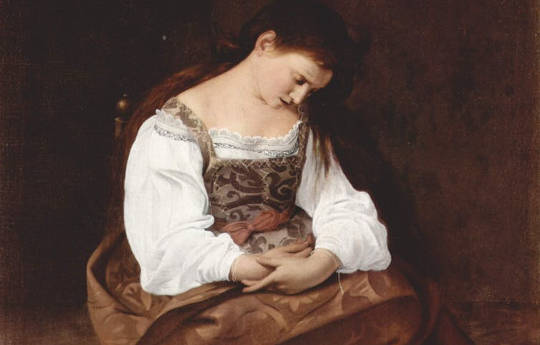
Who was Mary Magdalene? What do we know about her? And how do we know it?

Buddhist teachings are often summarized in terms of the "three principle aspects of the path": renunciation, compassion, and the wisdom realizing emptiness. The first step on the path of renunciation is to begin searching for happiness within. Renouncing the world does not mean rejecting the world...
 Certain attitudes are automatically more magnetic than others. Willingness, cheerfulness, kindness—all wholesome, spiritual attitudes are magnetic. Unwillingness, discouragement, and similar negative attitudes, on the other hand, impair the free flow of energy.
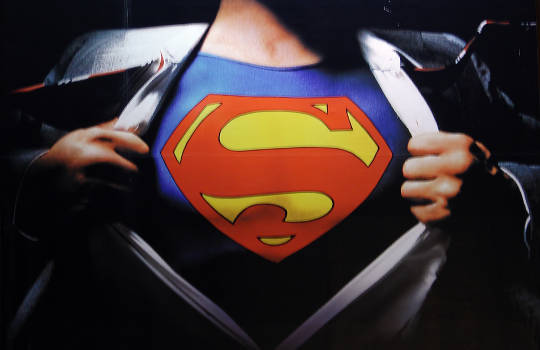 Savior archetypal figures reflect a common longing for a new Divine Human. Rather than being copycat myths, they represent allegories of humanity’s universal mystical potential for divine incarnation and the restoration of a sacred universe. The Divine Human comes to heal the culture’s abandonment of the realized divine.
 The perfect parking place shows up every time. Teeth with cavities grow new gold fillings seconds after a healer prays. The perfect house becomes available, a job opens, money multiplies, the right people appear... I don’t “believe” in miracles like these; I see them in my daily life...
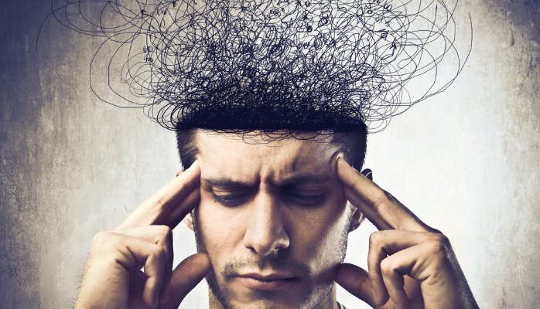 Even if you don’t believe in Christ or a God, religion can still be a powerful force. Research shows that even nonreligious people may hold unconscious beliefs linked to religion that can affect their psychology.
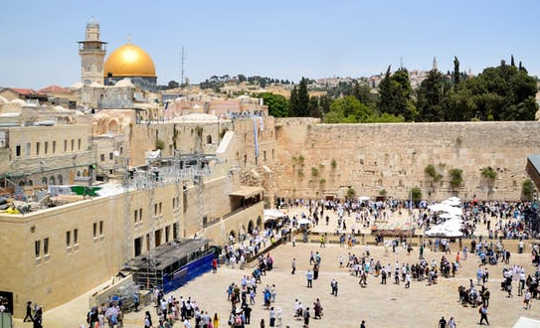 President Trump’s announcement on Wednesday, Dec. 6 that the U.S. would recognize Jerusalem as the capital of Israel received widespread criticism.
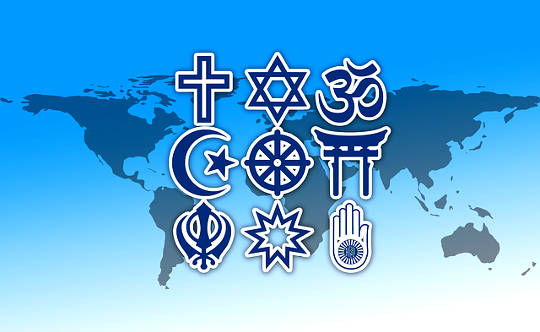 American families blend a mix of religious identities and traditions today more than ever. These interfaith dynamics appear in day-to-day life, but the holidays can add extra emphasis.
 Charles Manson, who died Nov. 19, famously attracted a coterie of men and women to do his bidding, which included committing a string of murders in the late-1960s.
 There is a large billboard sign along the Saw Mill River Parkway north of New York City that reads in big bold letters, “Prayer Works.” There are no other words on the sign. A man named Tom rode by that sign every single day on his way to work. He did not believe in prayer and he scoffed at the sign each day.
 I ask you to think about this question: do you really ask for help when you need it? If the answer is yes, do you ask for assistance with the little things in your life or only the big-ticket items? And who or what defines little...
 Each of us creates our own karma. Our past thoughts, speech and behavior have shaped our present reality, and our actions (and thoughts and speech) in the present will in turn affect our future. The Buddhist doctrine of karma is not fatalistic. Karma is...
 The deepest mystery, and perhaps the one for which there will never be an answer that will completely satisfy the itch of the intellect, is the miracle of Life itself. In his book The Living Universe, Duane Elgin writes, “American Indian lore speaks of three miracles. The first miracle is that...
 For every study that suggests a research link between prayer and healing, there are countless counter-arguments, rejoinders, rebuttals, and denials from legions of well-meaning “authorities,” whose principal motivation seems to be to save people from their own faith.
 Our ego, which is that fearful, judgmental voice in our head, that never feels satisfied, that constantly feels inferior or superior to others, that always wants more, more, more in order to feel ‘happy’, well that ego can often try to hijack our spiritual journey...
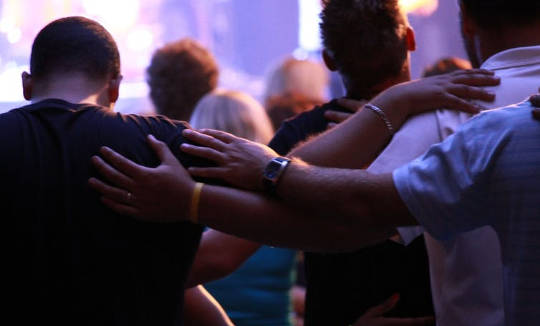 From Oct. 6 to 9, 2017, the National Mall in Washington, D.C. was filled with tents, worship music and prayer for the “Awaken the Dawn” rally. The purpose of the event, according to organizer Lou Engle, was to “gather around Jesus,” to pray for the nation and its government. It ended with a day of prayer by Christian women.
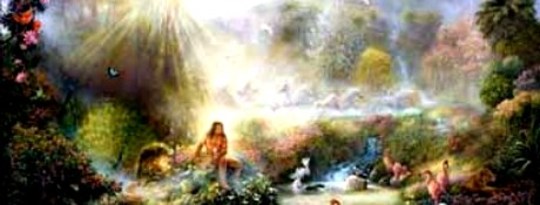 Some religious teachings may start out as lessons in Oneness but, over time, they become distorted, reinterpreted to be a lesson that justifies duality. The ancient story of Adam and Eve is one example. A common version of the story explains that humankind is doomed to live in misery because...
 The Ecstasy of St Teresa of Avila (1647-52) by 17th-century Italian sculptor Gian Lorenzo Bernini is one of the most famous images of the Baroque period. Located in the Cornaro Chapel, Church of Santa Maria della Vittoria, Rome, the marble sculpture represents Saint Teresa of Ávila, a Spanish nun canonised in 1622, sprawled on a cloud with an angel.