Can You Really Change the World Starting With One Choice?
The world feels broken, but what if the solution isn’t out there—it’s within you? Every thought, every reaction, every choice shapes…


Companies moving to a pay-for-performance process may lead to an increase the number of employees taking anxiety and depression medication, according to a new study.
 Perhaps you’re feeling a little chaotic in your mind — or worrying about everything and losing sight of what is important and what isn’t. Hands up then, everyone! It is a very likely state for a lot of us as we can often feel that a lot of demands are put on us.
 Herding behavior can make us “individually smarter, but collectively dumber,” according to new research on how people make forecasts in a group.
 Ask yourself, "Who do I pretend to be?" Sometimes we become so immersed in who we think we are -- or who others imagine us to be -- that we begin to identify with the mask that we wear as we weave our way through the world.If we come to believe that we are our mask, then...
 With this body, I’ve discovered I’m able to deliver into this world a virtually infinite spectrum of creative energy – from love, joy, creativity, beauty, sensuality, passion, intimacy; to sorrow, fear, pain, horror, despair and suffering. The choice of what to deliver is ever mine.
 Personal Power comes from within, from a strong and healthy sense of self. Your personal power includes several components: your self-esteem, how good you feel about yourself; your independence, how well you can decide on your own what is right for you to do; and your initiative...
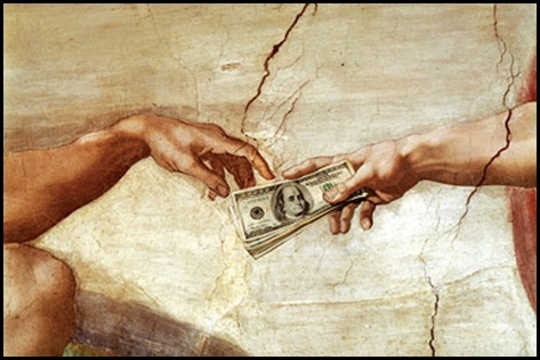
Meritocracy has become a leading social ideal. Politicians across the ideological spectrum continually return to the theme that the rewards of life – money, power, jobs, university admission – should be distributed according to skill and effort.

Have any of you noticed that sometimes when you try to create something, certain obstacles will come up which question exactly what you're trying to create? I've wondered if this is some kind of test, you know, to see how bad I really want the creation.

Which is better for a teen who can’t get the recommended amount of rest: just 6.5 hours of sleep at night, or 5 hours at night plus a nap in the afternoon?

As a koan teaching tells us, “To touch the absolute is not yet enlightenment.” When these moments come, there is a tendency to think, “Aha, I’ve got it!” Yet, just as on one level this gratifying thought fills us with a sense of accomplishment and empowerment, on another level we can already feel it slipping away, as the moment passes...

I always found spirituality, the disciplines of meditation and silence, very simple. My challenge was between activity and stillness. I always got off on the adrenaline trip of being active. That's why I've traveled around so much.
 People consume far less information than expected before making judgments and decisions, a new study finds.

You have probably seen the cartoon sketch that depicts stress as 'the overwhelming urge to choke the living #@*% out of someone who desperately deserves it'. While that depiction may be true, it certainly is not the only form of stress.
Life is a challenge. Utilizing your capabilities, pushing to become all you might be, is a relentless dare. But when you are alive, that is the homework that has been assigned to you. Regardless of the variety of "wings on your heart," the issue is the same for everyone. Push to...
Much of the advice about getting rid of clutter seems to start with the cheerfully abrupt command to “Just do it!” But when you can’t identify the underlying beliefs that are causing you to become buried in clutter, that’s almost impossible. So I’ve listed a few tough-love strategies to initiate change...

We're all carrying around such incredibly heavy loads of excess baggage, stuff we don't need, stuff that's weighing us down and preventing our Good from manifesting. One of the best ways to feel better is to release. When you release, you become lighter. Releasing is a good way to raise your energy.
 Boredom is not a condition; it is an attitude. Anything can be boring if you bring a closed mind to it. Anything can be fascinating if you bring an open mind to it. You can make anything out of anything.
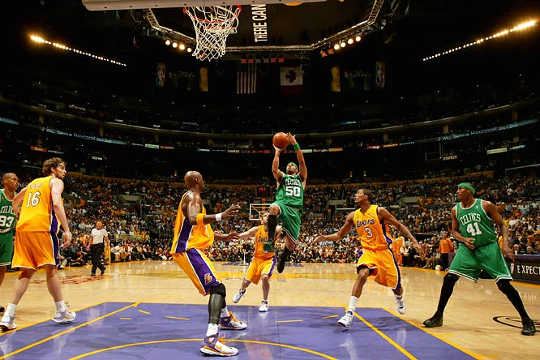 NBA players who use Twitter or other forms of social media late at night don’t perform as well on the court the next day, a new study shows. A player’s shooting percentage was 1.7 percentage points lower following a night during which he tweeted during typical sleeping hours. Late-night tweeting was also associated with approximately 1.1 fewer points scored and 0.5 fewer rebounds in the next day’s game.
 The current approach today is essentially we’ve entered into a culture of freneticism—that’s a Big Think word, and that means we’re really busy. But I believe we’ve created the business on ourselves.

Talk to high-school students preparing for their science exams, and you’ll probably hear two things: that they’re scared of physics, and relatively comfortable with biology. Strangely, this is contrary to the view of most researchers.

Roger Fisher (1922–2012) served as a reconnaissance pilot in World War II and then graduated from Harvard Law School, becoming a professor there in 1958. Witnessing maiming and death firsthand during the war and then seeing the destructive effects of costly, protracted litigation as a partner in a major law firm, Fisher was passionate about finding more creative alternatives to resolve conflict.
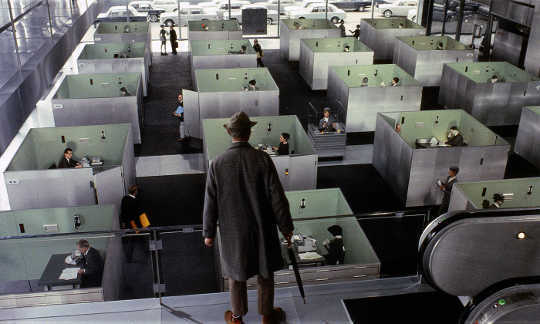
More and more companies, government agencies, educational institutions and philanthropic organisations are today in the grip of a new phenomenon. I’ve termed it ‘metric fixation’. The key components of metric fixation are the belief that it is possible – and desirable – to replace professional judgment (acquired through personal experience and talent) with numerical indicators of comparative performance based upon standardised data (metrics); and that the best way to motivate people within these organisations is by attaching rewards and penalties to their measured performance.
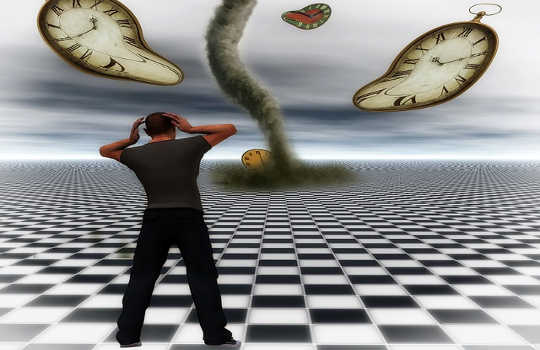
On average, men pick up on visual motion significantly faster than women do, according to a new study. Humans’ ability to notice moving objects has always been a useful skill, good for avoiding an animal predator in ancient times and crossing a busy street in the modern world.