


Can You Really Change the World Starting With One Choice?
The world feels broken, but what if the solution isn’t out there—it’s within you? Every thought, every reaction, every choice shapes…


As survey results pile, it’s becoming clear Australians are sceptical about how their online data is tracked and used. But one question worth asking is: are our fears founded?

Calls to reform, defund or even outright abolish police in the U.S. are coming from many corners of American society.
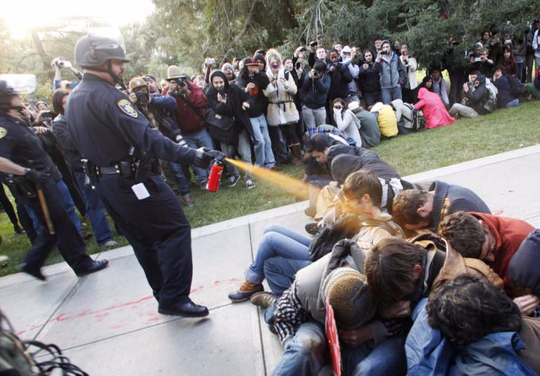
Police use-of-force policies in the nation’s 20 largest cities fail to meet international human rights standards, according to a new report.
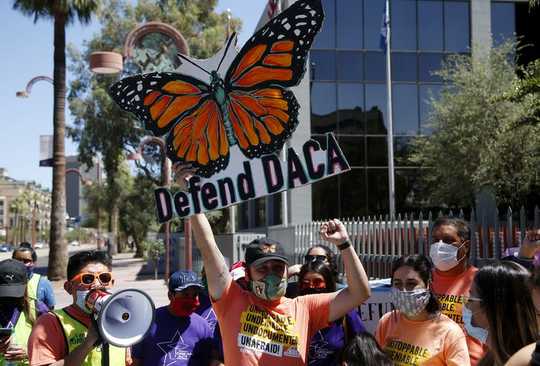
In a 5-to-4 decision that came as a major blow to President Trump, the justices ruled that the administration could not proceed with plans to dismantle Deferred Action for Childhood Arrivals, or DACA.

Two days after the Catholic bishop of El Paso, Mark Seitz, knelt with a dozen other priests in a silent prayer for George Floyd holding a “Black Lives Matter” sign, he received a phone call from Pope Francis.

The problem of police brutality against black Americans isn’t caused by “a few bad apples” on police forces, a new paper argues.

The unrest sparked by the death of George Floyd after being pinned to the ground by the knee of a Minneapolis police officer has left parts of U.S. cities looking like a battle zone.

Ring promises to keep more neighbourhoods safe, but will smart surveillance systems really make you safer?

A 2019 surge of gang-related shootings in Toronto motivated the Ontario government to commit $3 million to double the number of Toronto Police surveillance cameras in the city.

Researchers discovered that Amazon’s Alexa, Apple’s Siri and Google Home can be hacked by laser pointers and flashlights.

We give out our cell phone numbers all the time, but those 10 digits also give companies a ton of information about us and how we live our lives.

Sentencing a person to die is the ultimate punishment. There is no coming back from the permanence of the death penalty.

Public attitudes towards punishment have been a key area of research in criminology. Criminologists are interested in the attitudes of the general public towards the punishment of those who have committed crime.

My recent research increasingly focuses on how individuals can and do manipulate, or “game,” contemporary capitalism. It involves what social scientists call reflexivity and physicists call the observer effect.

Individuals and businesses unknowingly expose themselves to security and privacy threats, as experts explain here.

Social media platforms like Twitter, Instagram, and Facebook collect a staggering amount of data points from us, so much data that our social media activity can pretty accurately reveal things from gym habits to the state of our mental well-being.
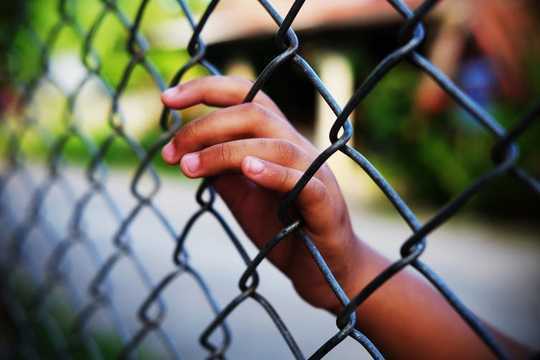
Reports this week of an Indigenous boy with a disability held naked for days in a Brisbane police cell have once again raised the issue of how best to treat our most vulnerable young offenders, and the impact of their incarceration.

The abuse inflicted on child detainees at the Don Dale facility in the Northern Territory in Australia has shone a much-needed light on youth justice.

A familiar scenario: as part of having your cholesterol checked, your clinician also orders a standard blood panel – a red blood-cell count, and then a breakdown showing the proportions of five types of white blood cells.

High-profile data breaches at companies like British Airways and Marriott get a lot of media coverage, but cybercriminals are increasingly going after community groups, schools, small businesses and municipal governments.

New proposed legislation by U.S. senators Mark R. Warner and Josh Hawley seeks to protect privacy by forcing tech companies to disclose the “true value” of their data to users.
 California’s punishment economy is booming. Every year, state taxpayers spend $20 billion to punish people. That’s more than enough to cover the costs of tuition for every student attending public college in California. And it’s almost three times the state’s public spending on mental health services.
 In January 2019, Liberal MP Adam Vaughan argued that privacy concerns about the smart city proposed for Toronto’s waterfront should not be allowed to “reverse 25 years of good, solid work and 40 years of dreaming on the Toronto waterfront.”