

Can You Really Change the World Starting With One Choice?
The world feels broken, but what if the solution isn’t out there—it’s within you? Every thought, every reaction, every choice shapes…


In the long-running television drama “Breaking Bad,” viewers watched the moral devolution of Walter White, a cancer-stricken high school chemistry teacher who tried to provide for the financial future of his family by cooking methamphetamine.

Seventy years ago, Eric Blair, writing under a pseudonym George Orwell, published “1984,” now generally considered a classic of dystopian fiction.
The notifications that companies send consumers about data breaches lack clarity and may add to customer confusion about whether their data is at risk, according to new research.
 On December 14, 2017, the Federal Communications Commission (FCC) voted to repeal its net neutrality rules, which critics say could make the internet more expensive and less accessible for Americans.
In criminal justice systems, credit markets, employment arenas, higher education admissions processes and even social media networks, data-driven algorithms now drive decision-making in ways that touch our economic, social and civic lives.

The 2017 Stress in America survey has confirmed it: Americans are officially freaking out.

Smart speakers equipped with digital voice assistants such as Siri and Alexa are now the fastest-growing consumer technology since the smartphone.

What can we do about looming threats to our privacy online and the theft of important personal information? Ari Trachtenberg has some ideas.
 Should being under 18 give youth a discount on the price to pay for their crimes? As a matter of conscience, it should – even kids such as Cunningham deserve a break. In fact, in every mature legal system, age matters
 New research digs into the behaviors—both obvious and subtle—that may put you at risk of falling victim to cybercrime involving Trojans, viruses, and malware.
 How marginalized groups are working to counteract historical wealth inequality.
 Hackers are watching you this holiday season, so be as mindful of your phone as of your cash and credit cards.
 Researchers have created a new method for keeping private the data that our many devices collect about how we use them.

As concerns about privacy increase for people using mobile apps, new research suggests that trust and engagement may hinge on perceptions about how the app uses personal data and whether it seeks user input before delivering services.

The dealings that have been revealed between Cambridge Analytica and Facebook have all the trappings of a Hollywood thriller
 At a time when social network privacy is in the news, new research shows there are more ways than previously realized to reveal certain traits we might be trying to conceal.
 Buying ethically sourced products is not as straightforward as it might seem, according to the first large-scale analysis of sustainable sourcing practices.
 Black people, especially women, are more likely to have been unarmed when killed by police than non-blacks, according to a new study of nationwide data.
 The use of lethal force by police officers in Minnesota and Baton Rouge has once again sparked protests over the violent dynamic between citizens and the police
 If you are the owner of a credit or a debit card, there is a non-negligible chance that you may be subject to fraud, like millions of other people around the world.
 Fictional metaphors matter, and in the battle to safeguard our civil liberties few metaphors matter more than George Orwell’s 1984. Although first published almost 70 years ago, the lasting salience of this most archetypal dystopia is undeniable.
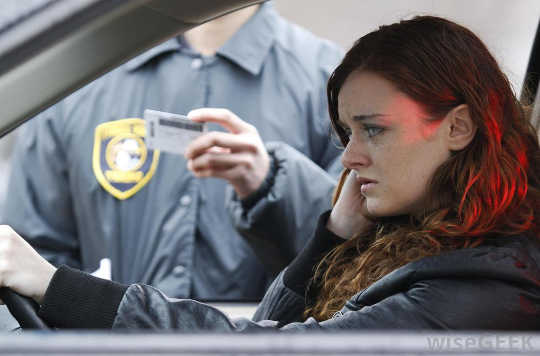 Police officers consistently use less respectful language with black community members than with white community members, the first systematic analysis of body camera footage shows.
 Harvard recently rescinded admission offers for some incoming freshmen who participated in a private Facebook group sharing offensive memes.