


Can You Really Change the World Starting With One Choice?
The world feels broken, but what if the solution isn’t out there—it’s within you? Every thought, every reaction, every choice shapes…


In sociologist Jennifer Silva’s first book, “Coming Up Short,” she interviewed working-class young adults in Lowell, Mass., and Richmond, Virginia.

Collective bargaining has long been one of organized labor’s most attractive selling points.

Americans no longer regard women as less competent than men on average, according to a nationally representative study of gender stereotypes in the United States.
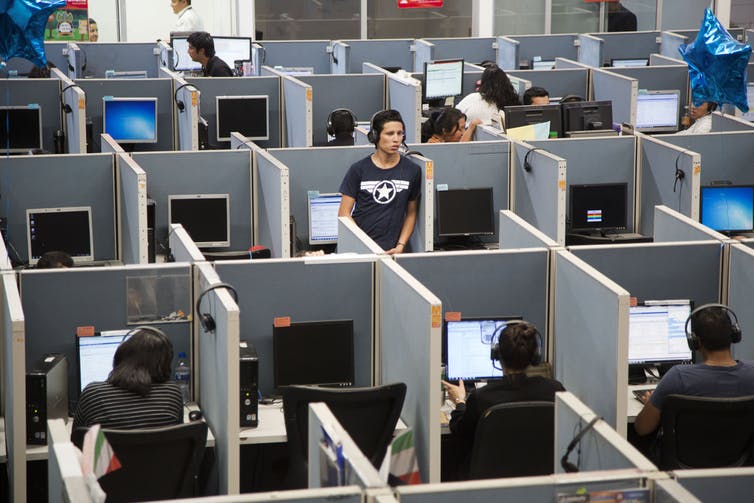
Escaping violence, war, poverty and environmental disaster, more people than ever are migrating worldwide. Some 258 million people – 3.4% of the global population – live outside their country of birth.

Efforts to decrease gender inequality, such as tuition-free primary education and paid parental leave, transform norms and improve health for women and their children, according to a new study.

In the shadow of Monte Pirucho, once a place of worship for the Taino tribe, Tara Rodríguez Besosa pulls a long, spiny plant from the bed of a small community garden and begins plucking its leaves.

Whether it was the physicist Niels Bohr or the baseball player Yogi Berra who said it – or, most likely, someone else – it is indeed hard to make predictions, especially about the future.

There is nothing natural about money. There is no link to some scarce essential form of money that sets a limit to its creation.
Robert Reich explains why labor unions impact the middle class and raise wages.

Robert Reich and W. Kamau Bell explain the criminalization of poverty and the flaws in our criminal justice system.

Less than half of school-aged children in the United States are flourishing, research finds.

Early childhood education programs can benefit life outcomes in ways that span generations, new research shows.

A college education can set you up for a lifetime – though it can come with a hefty price tag

The story about how we started to think this way about food is closely linked to the rise of the potato as a national starch.

Robert Reich explain how the wealthy and corporations receive billions in corporate welfare.

A new report shows growth of dollar stores in low-income and rural communities furthers inequity and pushes out local businesses.
 The idea that has been passed around by most conservative and liberal government leaders and representatives is that little can be done for the people because "money" is in short supply.

Robots have been taking our jobs since the 1960s. So why are politicians and business leaders only now becoming so worried about robots causing mass unemployment?
The banking system is a source of great confusion for many people, How was fractional reserve Banking put together, what is the history of banking in the United States?

Robert Reich debunks 12 misconceptions about tax policy in America.

Robert Reich explains how the modern economy really works and what we can do expand economic opportunity. Watch More

Australia’s national minimum wage should become a “living wage”, according to a new campaign from the Australian Council of Trade Unions (ACTU). But what exactly is a living wage?

There has been an impressive expansion in school enrolment in India since the early 2000s. Despite this, India is in the midst of a “learning crisis”, with improvements in learning lagging behind increases in enrolment.