


Can You Really Change the World Starting With One Choice?
The world feels broken, but what if the solution isn’t out there—it’s within you? Every thought, every reaction, every choice shapes…

 Climate-related catastrophes are expensive, whether they come on suddenly, like the thousand-year flood in Louisiana in August 2016, or move slowly and inexorably, like desertification in Turkey.
 Hurricane and tropical storm development from three million years ago might give today’s forecasters a good blueprint for 21st-century storms.
 Scientists now agree: warmer weather in the Arctic and a wavy jet stream are influencing winter weather in the UK and US.
 The destructive nature of Hurricane Matthew—which resulted in hundreds of deaths in Haiti, dozens more in the US, and extensive damage still being assessed—was a test of strength in communications systems, infrastructure, and ultimately the resilience of communities.
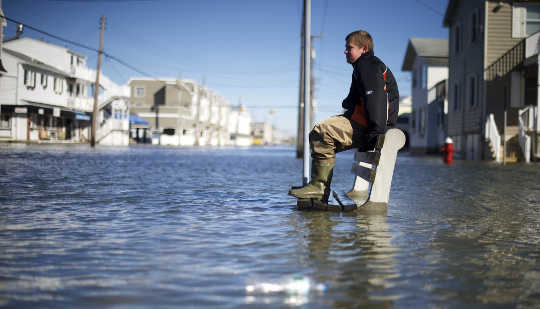 New York City can expect nine-foot floods, as intense as the one produced by 2012’s Superstorm Sandy, at least three times more frequently over the next century—and possibly as much as 17 times more frequently, say researchers.
 In this presidential election year we have heard much about some issues, such as immigration and trade, and less about others.
 The unprecedented West Coast toxic algal bloom of 2015 appears to be linked to the unusually warm ocean conditions—nicknamed “the blob”—in the winter and spring of that year.
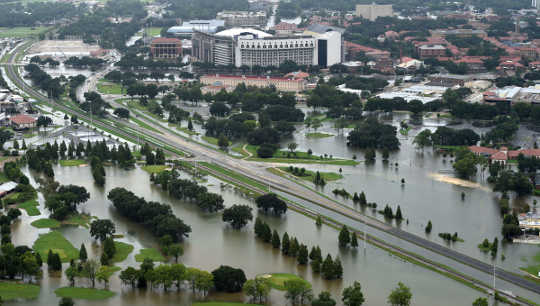 Hurricane Matthew has slammed into the Florida coast after hammering Haiti. Close to 2 million people were asked to evacuate to escape its winds and rain.
 Spring arrives and the warming weather encourages the plants in our gardens and parks to burst into life, commencing their annual reproductive cycle.

The planet could pass the critical 1.5°C global temperature threshold in a decade—and is already two-thirds of the way to hit that warming limit, climate scientists warned on Thursday.
 Trees are dying across Yosemite and Yellowstone national parks. Glaciers are melting in Glacier Bay National Park and Preserve in Alaska. Corals are bleaching in Virgin Islands National Park.
 Ethicist Peter Singer told Q&A that climate change-related sea level rises are “estimated to cause something like 750 million refugees just moving away from that flooding”.
Southern Africa is noted for its wealth of biological diversity and for its high proportion of endemic species. These are species that are unique to a specific location and are found nowhere else in the world. Many of the region’s endemic species can be found in South Africa’s fynbos and succulent Karoo biomes.
 Smoldering peat gives off massive quantities of carbon dioxide and other pollutants, but the search for solutions is on.
 On May 19, India’s all-time temperature record was smashed in the northern city of Phalodi in the state of Rajasthan. Temperatures soared to 51?, beating the previous record set in 1956 by 0.4?.
 Squid, octopus and cuttlefish populations are booming across the world. These fast-growing, adaptable creatures are perfectly equipped to exploit the gaps left by extreme climate changes and overfishing, according to a study colleagues and I published in the journal Current Biology.
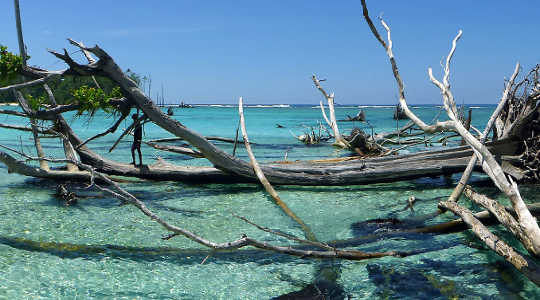 Sea-level rise, erosion and coastal flooding are some of the greatest challenges facing humanity from climate change.
 A team of marine scientists has returned from nearly a month of scuba diving on coral reefs in the middle of the equatorial Pacific Ocean. What they saw will haunt them for a long time.
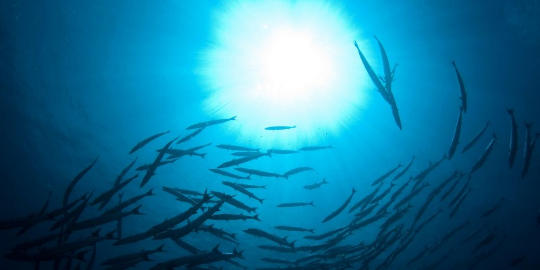 Marine life faces increased threats as researchers warn that warmer waters caused by climate change could seriously reduce the levels of oxygen in the world’s seas.
 Global average sea level has risen by about 17 cm between 1900 and 2005. This is a much faster rate than in the previous 3,000 years. The sea level changes for several reasons, including rising temperatures as fossil fuel
 As we write, the much-cherished Great Barrier Reef is experiencing the devastating effects of coral bleaching. The Great Barrier Reef Marine Park Authority has declared severe coral bleaching underway on the reefs north of Cooktown.
 "While the effects have been most pronounced in the West, our analysis shows virtually all US forests are now experiencing change and are vulnerable to future declines," says James Clark.
 One of the big problems with the world’s heavy carbon emissions is that they are driving up the levels of carbon dioxide in our oceans, which is making them more acidic.